

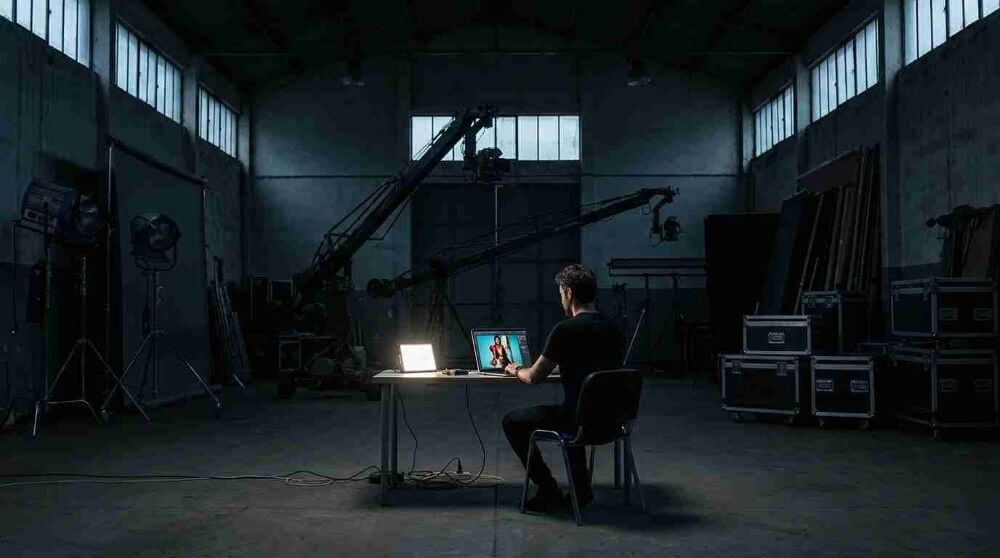
When it comes to scaling visual content production, the traditional model has always had a fixed ceiling. You could throw more budget at it hire more designers, commission more photography, pay for better stock subscriptions but the output volume scaled roughly linearly with spend. There was no way to produce twice the creative without roughly twice the resources. That constraint shaped everything: how campaigns were planned, how frequently brands refreshed creative, how many SKUs got proper visual treatment, and how quickly teams could respond to opportunities.
That ceiling is gone now. Not partially raised structurally removed. The economics of visual production have changed in a way that’s more significant than most teams have fully absorbed, because the change didn’t happen all at once. It happened gradually and then suddenly, and the brands that recognized the shift early built production advantages that are compounding in real time while competitors are still running the old playbook.
I’ve watched this transition up close across brand teams, agencies, and solo creator operations. This guide covers what’s actually being replaced, why the replacement is happening at the pace it is, and what the transition looks like in practice for teams navigating it now.
The Traditional Visual Production Process and Its Built-In Limits
To understand what’s being replaced, it helps to be specific about what the traditional process actually involves. A standard visual asset production cycle brief through to publish-ready output typically runs through five stages: creative briefing, design or photography execution, client or stakeholder review, revision, and final output formatting for each required placement.
Each stage has a minimum time floor regardless of how efficiently it’s managed. A photography shoot requires booking, location, talent, equipment, and post-production. A design asset requires a designer’s focused attention and at least one revision cycle. Even the fastest traditional workflows measured in days. Complex ones measured in weeks.
The ai image generator category has removed the minimum time floor from that model. Brief-to-asset cycles that ran two to four days now run twenty minutes. Revision cycles that required designer availability now require a prompt adjustment. Volume that required a team now requires a single operator. That’s not incremental improvement it’s process replacement.
Four Traditional Processes Being Replaced Right Now
Process 1 Concept Photography for Lifestyle and Campaign Creative
Lifestyle photography a product in use, a person in an aspirational setting, a brand moment captured in the real world has traditionally required the most resource-intensive production process in visual content. Location scouting, talent casting, styling, lighting setup, shooting, and post-production could consume $10,000 to $50,000 and two to four weeks for a single campaign.
AI image generation now handles the majority of lifestyle creative use cases at a fraction of that cost and in a fraction of that time. The outputs aren’t universally indistinguishable from photography but for the use cases that represent most of the volume in a typical content operation, they’re close enough that the economic argument for traditional production has collapsed.
From my experience running side-by-side performance tests between AI-generated lifestyle creative and traditionally photographed assets, the performance gap in ad metrics is smaller than most brand teams expect and in some audience segments, the AI-generated assets outperform because the visual register matches the platform’s organic aesthetic more closely than polished photography does.
Process 2 Product Image Variation for E-Commerce
E-commerce visual production has a specific volume problem: every SKU needs multiple image angles, every color variant needs its own asset set, and every seasonal campaign needs refreshed creative. The traditional production model makes this prohibitively expensive at any meaningful catalog scale.
My team noticed that e-commerce brands with catalogs above fifty SKUs are among the fastest adopters of AI image generation specifically because the ROI calculation is immediate and unambiguous. The choice between a $5,000 photography day that produces assets for eight SKUs and an AI generation workflow that produces assets for eighty SKUs at the same cost isn’t complicated.
Process 3 Ad Creative Testing and Iteration
Performance marketing has always required creative volume multiple visual directions, multiple format variations, multiple audience-specific versions of the same core concept. Traditional production makes this volume expensive enough that most teams test fewer creative directions than they should, which means leaving performance data on the table.
I found that the teams using AI image generation for ad creative testing aren’t just producing the same creative faster they’re testing three to four times as many directions as they did under traditional production constraints. That increase in testing volume produces better optimization data, and better data compounds into better campaign performance over time.
Process 4 Social Media Visual Content
Social media content requires the highest visual volume of any content category and the shortest turnaround from brief to publish. Traditional production processes were never really designed for this use case the pace mismatch was always visible in the gap between the quality of a brand’s campaign photography and the quality of its daily social content.
AI image generation closes that gap. From my experience, brands that have integrated it into their social content workflow are producing consistently higher-quality social visuals without adding headcount and without the quality cliff that happened every time the campaign photography ran out and the team had to fall back on stock.
How Higgsfield Fits Into the Production Replacement Picture
Higgsfield approaches image generation as a production tool rather than a creative toy, and the distinction matters for teams evaluating whether it can actually replace traditional production workflows rather than supplement them.
Production-Grade Output Quality
The platform produces outputs that hold up in real production contexts correct resolution for publication, consistent quality across a session, visual coherence between assets generated from the same prompt architecture. My team ran extended production tests generating thirty or more assets per session and evaluated quality consistency across the full run. The outputs held at a level that supports genuine production replacement rather than just concept development.
Workflow Speed That Matches Campaign Timelines
From my experience, the speed characteristics that matter for production replacement aren’t raw generation time they’re first-attempt usability rate, variation speed, and format flexibility. Higgsfield performs well on all three. Briefs written in plain language produce usable outputs within one to two generations consistently, variation across a campaign asset set is manageable within a single work session, and output dimensions can be configured to match placement requirements without post-processing.
Integration With Video Content Production
For teams replacing not just static image production but also video creative production, working within a platform that handles both removes the workflow friction of managing separate tools. Visual consistency across static and motion assets which matters for brand coherence across a campaign is significantly easier to maintain within a single production environment.
Production Model Comparison: Traditional vs. AI-Generated
| Production Factor | Traditional Process | AI Image Generation |
| Lifestyle campaign asset | $10K–$50K; 2–4 weeks | ~$30–$80/mo platform cost; hours |
| E-commerce SKU variation | $500–$2K per SKU set | Fraction of cost; same day |
| Ad creative testing volume | 3–5 directions per cycle | 15–20 directions per cycle |
| Social content cadence | Bottlenecked by production queue | Matches any publishing frequency |
| Last-minute brief change | Restart production cycle | Adjust prompt; regenerate |
| Revision cost | Designer time; day or more | Seconds; new prompt |
According to HubSpot’s State of Marketing Report, marketing teams spend an average of 30% of their total working hours on content production tasks and visual asset creation consistently ranks as the highest time-cost item within that category. That’s not a skills gap or an efficiency problem. It’s a structural characteristic of the traditional production model.
Pricing: What the Replacement Actually Costs
| Tier | Price | Volume | Commercial Rights |
| Free | $0 | Limited daily credits | Personal/editorial use |
| Creator | ~$29/mo (billed annually) | Higher daily volume; full resolution | Included |
| Pro | ~$79/mo (billed annually) | High-volume; priority queue | Full commercial rights |
Verify current pricing on the platform tiers update periodically.
Pros and Cons: AI Production Replacement vs. Traditional Workflows
| Approach | Pros | Cons |
| AI image generation (Higgsfield) | Eliminates production timeline; scales without headcount; dramatically lower cost per asset; enables creative testing at volume; self-serve under deadline | Output quality ceiling varies by use case; luxury and high-end categories may still require photography; commercial rights need verification per tier |
| Traditional photography/design | Maximum quality and control; best for flagship brand assets; real-world material fidelity | Expensive; slow; doesn’t scale; vulnerable to bottlenecks; revision requires restart |
| Hybrid model | AI for volume and testing; photography for hero assets and premium categories | Requires clear brief criteria for which workflow applies to which asset type |
Which Production Model Better Suits Your Operation?
Full AI production replacement works best if you’re running a DTC brand or content operation with high visual volume, your categories don’t require photographic authenticity as a trust signal, and your campaign frequency makes traditional production economics unsustainable.
Traditional production remains relevant if you’re in a luxury, premium fashion, or fine food category where photographic realism is directly tied to brand positioning, or you’re producing a small number of high-investment hero assets where maximum quality justifies the cost.
A hybrid model works best for most scaling brands AI generation for social content, ad creative testing, e-commerce variation, and campaign support assets; photography reserved for flagship campaigns and hero brand moments where the investment is justified.
For teams ready to begin replacing traditional production processes, the ai image generator inside Higgsfield is the platform I’d start with.
Final Thoughts
The replacement of traditional visual production processes by AI image generation isn’t a future development it’s happening now, in real brand operations, with measurable results on production costs and creative output volume. The teams that have moved earliest are already running faster and testing more than their competitors, and that advantage compounds with every campaign cycle.
From my experience, the hesitation most teams feel about making this shift isn’t really about quality it’s about change management. The traditional production workflow is familiar, and there’s institutional trust in it even when it’s slow and expensive. Replacing it requires accepting that the new process is genuinely better for most use cases, and that acceptance is harder than the technical transition.
The evidence is available to test directly. Run your next campaign brief through Higgsfield’s ai image generator alongside your traditional process and compare the outputs, the timelines, and the cost. Let that comparison make the case because once you’ve seen the production model side by side, the traditional process is very hard to justify for high-volume work.
